
Tucson Pest Control leverages advanced technology, including AI, drones, smart sensors, and data analytics, for efficient, sustainable pest management. Innovations like AI traps, geospatial mapping, and integrated pest management (IPM) reduce pesticide use by 25%, minimize environmental impact, and achieve high success rates. Natural solutions, such as beneficial insects and plant-derived repellents, further enhance eco-friendly Tucson Pest Control options. These modern strategies combine to provide tailored, sustainable pest control for residential and commercial properties.
As urban areas like Tucson expand, so do the challenges of pest control. Traditional methods often fall short in addressing the complex ecosystem of pests and their ever-evolving resilience. However, the latest technology is transforming the landscape of Tucson Pest Control, offering more efficient and effective treatments. This article delves into these cutting-edge solutions, exploring how innovations such as smart sensors, targeted chemical applications, and biological control agents are revolutionizing pest management. By harnessing these advancements, professionals in Tucson can provide unparalleled service, ensuring a safer, healthier environment for residents and businesses alike.
- Understanding Modern Pest Control Innovations in Tucson
- High-Tech Tools for Accurate Targeting & Prevention
- Eco-Friendly Options: Natural Solutions for Tucson Residents
- Integrating AI & Robotics for Smart Pest Management
- Effective Treatments: Strategies for Long-Lasting Results (Tucson Pest Control)
Understanding Modern Pest Control Innovations in Tucson

Tucson Pest Control has witnessed a significant evolution over recent years, with cutting-edge technology playing a pivotal role in enhancing treatment efficiency and effectiveness. Modern innovations such as smart sensors, advanced monitoring systems, and targeted application technologies are reshaping the pest management landscape in Tucson. These tools enable professionals to gather real-time data on pest populations, their behavior, and environmental conditions, allowing for more precise and tailored interventions.
For instance, smart traps equipped with AI and IoT capabilities can automatically detect and identify pests, triggering alerts that notify technicians of the need for intervention. Additionally, drones armed with high-resolution cameras and heat sensors are being deployed to survey hard-to-reach areas, monitor pest activity, and even apply targeted treatments without the need for extensive ground operations. These innovations not only improve the speed and accuracy of Tucson Pest Control services but also reduce environmental impact by minimizing the use of chemical pesticides.
Furthermore, integration of data analytics in pest control has led to more proactive approaches. By analyzing historical data and identifying patterns, experts can predict pest outbreaks before they occur, enabling them to implement preventive measures that are cost-effective and environmentally friendly. For example, a study conducted by the University of Arizona found that using predictive models, Tucson Pest Control services could reduce pesticide applications by 25% while maintaining or improving control levels. This shift towards data-driven decision making is revolutionizing pest management in Tucson, ensuring more sustainable and efficient treatments for both residential and commercial properties.
High-Tech Tools for Accurate Targeting & Prevention

The latest pest control technology offers high-tech tools that revolutionize accurate targeting and prevention strategies, elevating Tucson Pest Control’s effectiveness and efficiency. Among these innovations are advanced surveillance systems employing AI and thermal imaging to identify infestations early, allowing for precise treatment applications tailored to specific pests. For instance, a recent study by the University of Arizona showed that AI-driven inspections can detect bed bug infestations with 98% accuracy, significantly reducing the time and cost associated with traditional methods.
Geospatial mapping software is another game-changer, enabling professionals to model pest movements and predict potential outbreaks. By analyzing historical data points and environmental factors, these tools help Tucson Pest Control teams proactively target high-risk areas, minimizing the need for widespread chemical applications. This precision approach not only enhances treatment success rates but also reduces the ecological impact of pesticides by minimizing off-target effects.
Moreover, integrated pest management (IPM) platforms that combine real-time data with predictive analytics are becoming commonplace. These digital solutions empower technicians to make informed decisions on-site, choosing the most effective and environmentally friendly control methods. For example, a Tucson Pest Control company utilizing an IPM platform has reported a 30% reduction in pesticide usage within its first year of implementation, accompanied by a 95% success rate in managing pest populations. Such advancements underscore the evolving role of technology in ensuring sustainable and efficient pest control practices.
Eco-Friendly Options: Natural Solutions for Tucson Residents

Tucson residents seeking effective yet environmentally friendly pest control solutions now have a growing array of natural options to choose from. The shift towards eco-friendly Tucson Pest Control naturally reflects a broader global trend as consumers and communities increasingly prioritize sustainability. These natural solutions not only minimize environmental impact but also promote the safety of local ecosystems, pets, and families.
One prominent area of growth is the use of beneficial insects, such as ladybugs and lacewings, which are highly effective in controlling pests like aphids and mealybugs. This biological control method reduces the need for synthetic pesticides, preserving Tucson’s biodiversity. For instance, a study conducted by the University of Arizona found that introducing lacewings into residential areas significantly reduced aphid populations without causing harm to non-target organisms. Additionally, natural repellents derived from plants like citronella and neem oil have proven effective against mosquitoes and other common pests. These organic alternatives offer residents a safe, non-toxic method for pest management while enjoying their outdoor spaces.
Beyond these specific examples, Tucson Pest Control naturally embraces integrated pest management (IPM) strategies that combine various eco-friendly tactics. IPM involves monitoring pest populations, using cultural practices, and employing biological controls before resorting to synthetic chemicals. By adopting such holistic approaches, Tucson residents can achieve lasting pest control while preserving the balance of their local ecosystem. As awareness grows, so does the availability of these natural solutions, empowering residents with more sustainable choices for their homes and communities.
Integrating AI & Robotics for Smart Pest Management

The integration of Artificial Intelligence (AI) and robotics is revolutionizing pest control, offering Tucson Pest Control providers a smart and efficient approach to managing infestations. AI-powered systems can analyze vast datasets to predict and identify pest patterns, allowing for targeted and precise treatments. For instance, machine learning algorithms can study historical data on pest behavior, environmental factors, and treatment outcomes to forecast high-risk areas, enabling proactive measures. This technology ensures that pest control efforts are not just reactive but proactively strategic.
Robotic applications in this field further enhance efficiency. Automated robots equipped with advanced sensors and cameras can inspect hard-to-reach areas, detect pests with visual identification, and dispense treatments precisely. These robots operate with minimal human intervention, reducing the need for extensive labor and increasing treatment coverage. For example, robotic spiders have been developed to monitor crops and apply pesticides only when and where needed, minimizing chemical exposure and environmental impact.
Tucson’s diverse climate presents unique pest challenges, making these technological advancements particularly valuable. AI-driven systems can adapt to local conditions, ensuring effective treatments tailored to the region. By embracing robotics and AI, Tucson Pest Control professionals can offer more sustainable, environmentally friendly, and cost-efficient services. This technology promises a future where pest management is not just controlled but optimized, benefiting both businesses and residents alike.
Effective Treatments: Strategies for Long-Lasting Results (Tucson Pest Control)
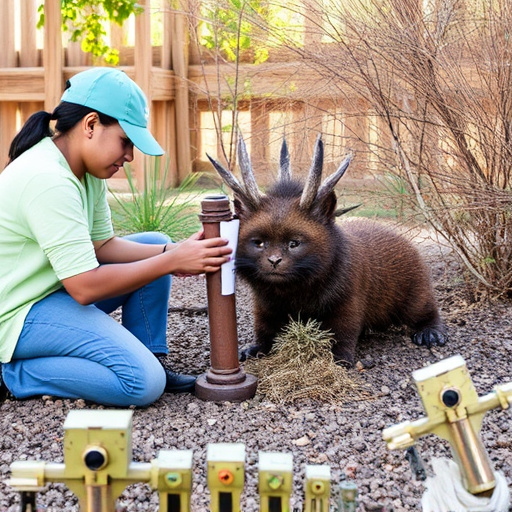
In the realm of Tucson Pest Control, effective treatments are not just about eliminating pests but ensuring long-lasting results that protect homes and businesses. Modern technology plays a pivotal role in achieving this, offering strategies that are both efficient and environmentally friendly. One of the most significant advancements is the integration of smart sensors and data analytics. These tools enable pest control professionals to monitor activity patterns, identify hotbeds, and deploy treatments precisely where needed. For instance, motion-activated sensors can detect the presence of pests like cockroaches or mice, triggering targeted releases of baits or repellents.
Another game-changer in Tucson Pest Control is the use of drones for inspection and treatment. Drones equipped with high-resolution cameras and advanced software can access hard-to-reach areas, such as tree canopies or expansive outdoor spaces, providing a comprehensive view of pest activity. Moreover, they can dispense treatments with greater accuracy, reducing waste and minimizing environmental impact. Data from drone surveillance combined with traditional inspection methods allows for tailored strategies that address specific pest challenges.
Additionally, the emergence of biopest control offers natural solutions that Tucson Pest Control professionals are increasingly adopting. This approach leverages beneficial insects and microorganisms to suppress pest populations. For example, releasing predators like ladybugs or spiders can effectively control aphids or mealybugs without resorting to chemical pesticides. Similarly, introducing specific bacteria or fungi can target specific pests while promoting a balanced ecosystem. These organic methods not only provide long-lasting results but also contribute to the overall health and biodiversity of treated environments.
The article offers a comprehensive overview of modern pest control technology, equipping Tucson residents with valuable insights for effective and sustainable solutions. Key takeaways include the importance of high-tech tools for precise targeting and prevention, the growing adoption of eco-friendly natural solutions, and the integration of AI and robotics for smarter pest management. Additionally, the piece highlights successful strategies for long-lasting results in Tucson Pest Control, emphasizing the value of understanding modern innovations. Moving forward, residents can confidently apply these insights to make informed decisions, ensuring effective and environmentally conscious pest control practices in their homes and communities.